Elections are widely regarded as a central element of democracy; however, for elections to be democratic, they require a fair, equal, and competitive political environment. While elections can bring about political change, they can also reinforce existing power structures.
In the Western Balkans, elections are held regularly but are often dominated by power elites, who have the ability to influence the political environment, electoral processes, and outcomes to their advantage. Although changes of government can occur, the dominance of governing parties over the political environment and their access to resources have made it increasingly difficult for
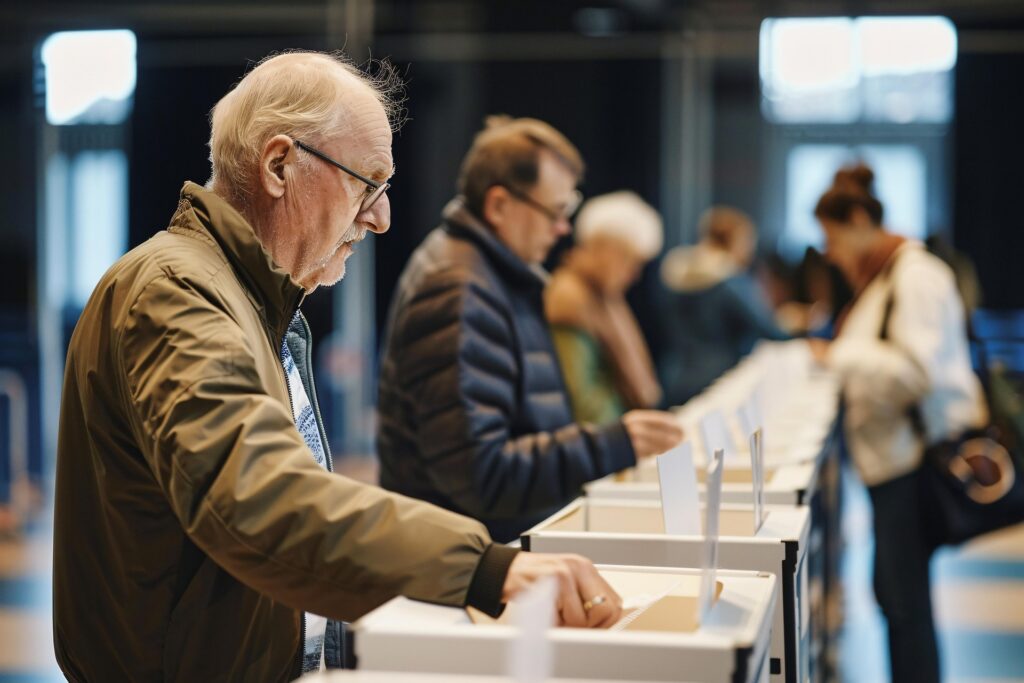
Quelle: Pixabay
voters to support viable alternatives. Additionally, the range of available political choices is often limited. Nevertheless, holding elections remains a risk for incumbent governments, as voters may reject the ruling parties and choose the opposition instead.
In autumn 2026, elections will be held in Bosnia and Herzegovina, while Kosovo returned to the ballot box in June 2026. Serbian President Aleksandar Vučić has announced that he will call early elections in autumn of this year. The Serbian elections will be crucial for the entire region. Moreover, recently held elections are also worth assessing. For example, in Republika Srpska, the Alliance of Independent Social Democrats (SNSD) was narrowly able to regain the presidency of Republika Srpska in the February 2026 election after Milorad Dodik was forced to step down from office due to his disregard for the decision of the High Representative. Local elections were held in Serbia in March 2026, which were won by the Serbian Progressive Party (SNS), although the results were contested due to allegations of irregularities. More recently, elections have also taken place in neighbouring countries, such as Bulgaria and Hungary, which may have implications for the Western Balkan region.
The democracies in the Western Balkans face a number of challenges. The conflicts and nationalist politics of the 1990s have left a lasting mark on the region’s democratic development. Political structures remain weak, executives maintain a dominant role, and electorates are often left without genuine political alternatives. The political systems in the Western Balkans are generally assessed as democratic, but with significant deficits. Meanwhile, Serbia was categorised as a “moderate autocracy” in 2026 (Bertelsmann Index 2026). Even in systems of competitive authoritarianism (Levitsky & Way 2002), elections are held regularly, as political leaders seek democratic legitimacy from their citizens. For citizens, elections provide an opportunity to hold their governments accountable; consequently, there is always the possibility that electoral legitimacy will be withdrawn from those in power. To avoid this scenario, incumbent governments attempt to manipulate the electoral playing field in their favour through practices such as gerrymandering, changes to electoral laws, media control, bribery or intimidation of voters, and the use of extensive state resources.
In recent years, protest movements and independent civil society organisations have increasingly challenged their respective governments by demanding greater political transparency, the implementation of anti-corruption measures, political accountability, and the strengthening of democratic institutions. While governments employ increasingly autocratic tactics to remain in power, protest movements call for the re-democratisation of their political systems. The upcoming elections will serve as an indicator of whether processes of democratisation or autocratisation will prevail.
Societies seeking political change must be prepared to confront a range of obstacles, including electoral fraud, state-sponsored media propaganda, vote-buying practices, and intimidation by incumbent parties and candidates. However, achieving political change through elections represents only the initial stage of a much broader process. Once a transition of power has occurred, newly elected political actors, supported by the population, face the complex task of rebuilding and consolidating democratic governance. This process requires strengthening political institutions, restoring constitutional limits on executive authority, enhancing public trust in political and judicial institutions, and dismantling entrenched systems associated with the previous regime. Successful democratic reconstruction requires sustained cooperation among diverse political actors, state institutions, and civil society, as well as the support of broad segments of the population. At the same time, these efforts can be significantly hindered by veto players capable of obstructing reform initiatives. Consequently, electoral victory alone is insufficient to ensure democratic consolidation. While the process of re-democratisation must begin with a political opening, its success ultimately depends on the commitment and political will of actors across the political landscape to pursue and sustain democratic reforms.
This conference examines current political developments in the region, with particular emphasis on the role and significance of elections. It seeks to explore the extent to which elections can serve as catalysts for political change and democratic transformation. What expectations do citizens place on a functioning democratic system? How can political systems undergo processes of re-democratisation? Under what conditions might elections instead contribute to the authoritarianisation of political regimes? Furthermore, in cases where governments are replaced through electoral processes, what mechanisms and reforms are necessary to restore or strengthen democratic governance? Ultimately, the conference aims to assess the broader trajectory of political developments in the region and to consider whether current trends point toward democratisation or increasing autocratisation.
This event is organised by Andrássy University Budapest and forms part of the “Changing Orders Research Programme – 3: European Perspectives for the Western Balkans Region”, supported by the Swiss-Hungarian Cooperation Programme.
Programme: wil be uploaded soon
Registration open till: 15th December